What Does Restaurant Video Cost in 2026? The Complete UK Pricing Guide
Estimated reading time: 18 minutes
Table of Contents
- Why Restaurant Video Pricing Is Changing Significantly in 2026
- The Complete Restaurant Video Cost Breakdown: From £50 to £15,000+
- AI vs Traditional: Choosing the Right Restaurant Video Solution for Your Budget
- Making Restaurant Video Work: ROI, Strategy, and Your Next Steps
- Making Your Investment Count
- Frequently Asked Questions
You’ve just watched a competitor’s stunning restaurant video rack up thousands of views on Instagram, and now you’re wondering: what would something like that actually cost to produce? It’s a question more UK restaurant owners are asking in 2026, especially as video for restaurant marketing has become non-negotiable for attracting diners. But here’s where it gets complicated, restaurant video cost can range anywhere from £200 for a basic smartphone shoot to £15,000+ for a full production with professional crew, drones, and cinematic editing.
The pricing landscape has shifted considerably over the past year. Traditional restaurant video production still commands premium rates, but AI video tools and accessible editing software have created new middle-ground options that many restaurateurs don’t even know exist. Meanwhile, what constitutes “cheap restaurant video production” has evolved, it’s no longer just about finding the lowest price, but understanding which investment level actually delivers results for your specific goals.
What makes restaurant video cost particularly tricky to navigate is that you’re not just paying for filming time. You’re investing in concept development, location considerations, food styling, lighting that makes your dishes look irresistible, and post-production that transforms raw footage into scroll-stopping content. Miss any of these elements, and you risk wasting money on a video that simply doesn’t convert viewers into customers.
This guide breaks down exactly what you’ll pay for restaurant video production across every budget tier in 2026, from DIY approaches and ai video restaurant solutions to full-service agencies. By the end, you’ll understand not just the numbers, but which option makes financial sense for your restaurant’s marketing goals and how to avoid the most common costly mistakes.
Why Restaurant Video Pricing Is Changing Significantly in 2026
The restaurant video cost landscape has undergone a seismic shift that would have seemed impossible just two years ago. What once required a production crew, expensive equipment, and weeks of post-production can now be accomplished in hours, sometimes minutes, using AI-powered tools that didn’t exist when you last updated your marketing strategy.
Here’s what’s fundamentally different about restaurant video cost in 2026: the price gap between amateur-looking content and professional-grade videos has collapsed. Traditional video production companies still charge £5,000 to £15,000 for a single restaurant promo video, but AI-enhanced production studios and sophisticated DIY tools now deliver comparable quality for a fraction of that investment. This isn’t about choosing between “cheap” and “professional” anymore, it’s about understanding which production method aligns with your specific needs, timeline, and distribution strategy.
The driving force behind these changes is the maturation of AI video technology. Tools that were experimental novelties in 2024 have become production-ready solutions in 2026. AI can now handle colour grading that previously required a specialist colourist, stabilize shaky footage that would have been unusable, and even generate B-roll footage when you need to fill gaps in your narrative. When you’re evaluating restaurant video cost 2026, you’re no longer just paying for camera equipment and editing time, you’re deciding how much human expertise versus AI automation makes sense for your project.
But there’s a paradox at work here. While technology has democratized video creation, the sheer volume of restaurant content flooding social media platforms means standing out requires either exceptional creativity or sophisticated production values. A mediocre professional video might actually perform worse than a well-executed smartphone video that feels authentic and connects emotionally with viewers. This reality has fundamentally changed how savvy restaurant owners approach their video budgets.
The emergence of AI-powered restaurant technologies has extended beyond operational tools into creative production. Restaurant marketing video strategies now incorporate AI for everything from script generation to audience targeting, which means the total cost of video production includes considerations that didn’t exist in traditional pricing models. You’re not just buying a video, you’re investing in an integrated content ecosystem that can adapt and scale with your marketing needs.
Perhaps most significantly, the definition of “video for restaurant” has expanded. It’s no longer just a polished promotional piece for your website. In 2026, successful restaurants maintain a constant stream of video content across Instagram Reels, TikTok, YouTube Shorts, and emerging platforms. This shift from creating one flagship video to maintaining an ongoing content operation has completely restructured how restaurant owners think about video budgets. The question isn’t “what does one video cost?” but rather “what should I invest monthly in video content creation?”
The Complete Restaurant Video Cost Breakdown: From £50 to £15,000+
Understanding the full spectrum of restaurant video price options means recognizing that each tier serves genuinely different purposes, and that the cheapest option isn’t always the most cost-effective when you factor in results. Let’s break down what you actually get at each investment level, including the hidden costs that catch restaurant owners off guard.
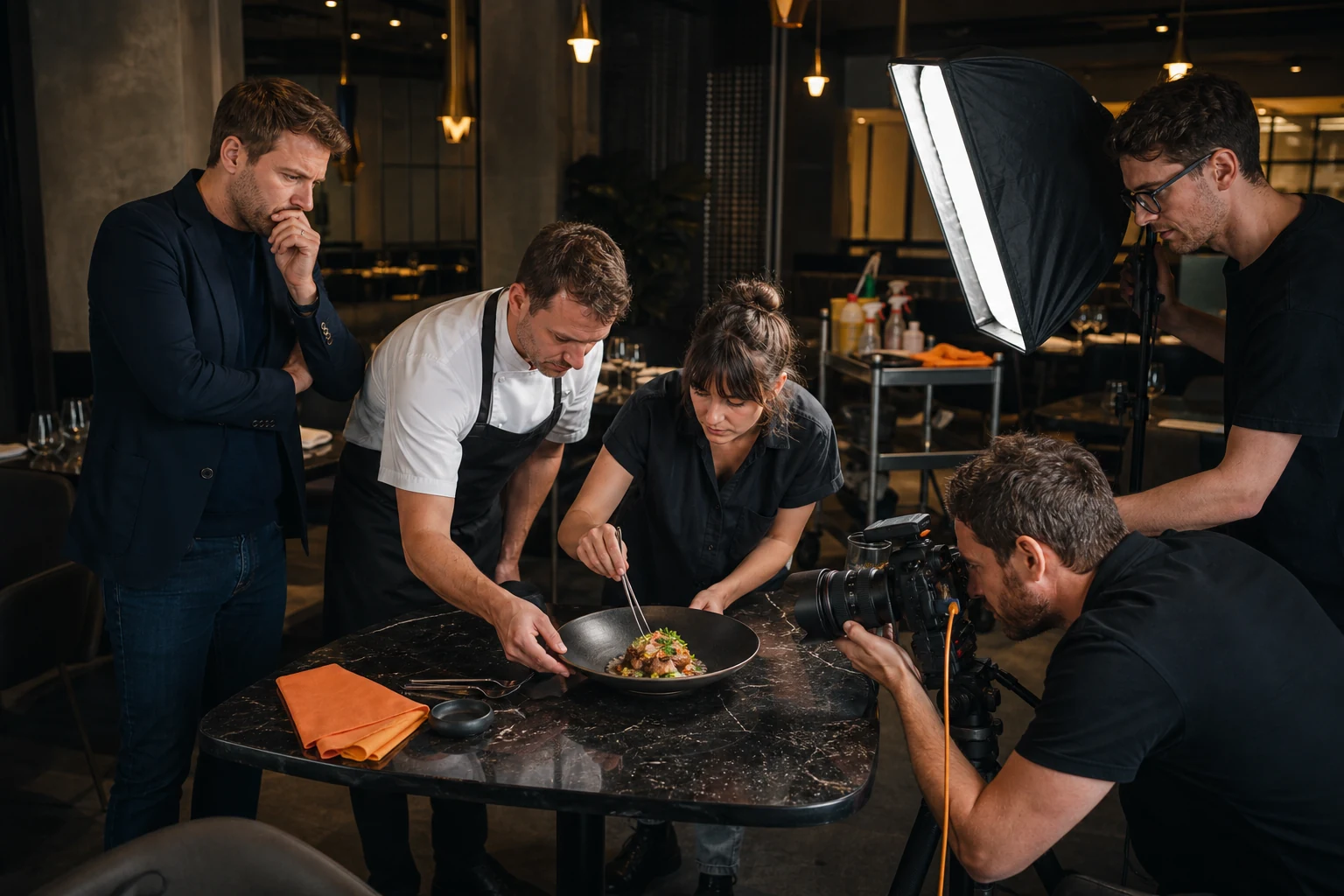
DIY Restaurant Videos: The £50-£500 Reality Check
The DIY approach has become remarkably sophisticated in 2026, but “doing it yourself” still requires an investment beyond just downloading a free app. At the absolute minimum, you’ll need a smartphone with decent video capabilities (which you likely already own) and basic editing software. Free tools like CapCut or InShot can handle simple edits, but you’ll quickly hit limitations that require paid subscriptions ranging from £8 to £30 monthly.
Here’s what actually works at this budget level: short-form content for social media platforms. Those 15 to 60-second Instagram Reels or TikTok videos showcasing a signature dish, a behind-the-scenes moment, or a quick customer testimonial. The authenticity of DIY content can actually be an advantage here, viewers respond positively to content that feels genuine rather than overly produced. However, you need to be realistic about the time investment. Creating a single polished 30-second video typically takes 2-4 hours when you factor in planning, filming multiple takes, editing, and revisions.
The hidden costs emerge quickly. You’ll probably want a small tripod or stabilizer (£25-£80), better lighting for consistent quality (£50-£200), and possibly a lapel microphone because poor audio ruins otherwise good footage (£30-£100). Many restaurant owners also discover they need stock music licenses (£10-£20 per track) or subscribe to music libraries (£15-£40 monthly) to avoid copyright issues. Suddenly, your “free” DIY approach has consumed £200-£500 in equipment and subscriptions before you’ve even created your tenth video.
The biggest cost, though, is opportunity cost. If you’re spending 10 hours weekly creating content instead of managing your restaurant, that’s time you’re not spending on operations, staff development, or customer experience. For some restaurant owners, particularly those who genuinely enjoy content creation or who operate smaller establishments where they have more time flexibility, DIY makes perfect sense. For others, it’s a false economy that distracts from core business activities.
AI-Powered Restaurant Video Production: The £100-£2,000 Middle Ground
This is where the restaurant video cost equation has changed most dramatically in 2026. AI-powered restaurant video production occupies the sweet spot between DIY limitations and traditional production expenses, offering professional-quality output without the traditional price tag. You’re essentially paying for AI tools to do the heavy lifting while human expertise guides the creative direction.
At the lower end (£100-£500 per video), you’re typically working with AI video platforms that can transform basic footage into polished content. These tools handle colour correction, audio enhancement, automatic captioning, and even suggest edit points based on engagement optimization algorithms. Services like these work best when you provide decent source footage, the AI can’t fix fundamental problems like terrible lighting or unfocused shots, but it can elevate acceptable footage to professional standards.
The mid-range (£500-£1,200 per video) typically involves a hybrid approach where a content creator uses AI tools to accelerate production but applies human judgment to creative decisions. This might include AI-generated storyboards, automated B-roll selection from stock libraries, AI-powered voiceover generation, and intelligent scene transitions. The human operator ensures brand consistency, emotional resonance, and strategic messaging while the AI handles technical execution. This approach works particularly well for restaurant promo video content that needs to maintain quality while being produced at scale.
At the higher end of AI-powered production (£1,200-£2,000), you’re getting near-professional results with faster turnaround times than traditional production. This might include custom AI-generated background music, sophisticated motion graphics, advanced colour grading, and multiple format optimizations for different platforms. The key advantage here isn’t just cost, it’s iteration speed. Need to test three different endings to see which drives more reservations? Traditional production might charge for three separate videos, while AI-enhanced workflows can generate variations at minimal additional cost.
The limitation of AI-powered production isn’t quality, it’s creativity and strategic thinking. AI tools excel at execution but still struggle with conceptual innovation and understanding nuanced brand positioning. If your restaurant has a straightforward story to tell and you need consistent, professional content at scale, this tier offers exceptional value. If you’re trying to create something genuinely unique that establishes your restaurant as a destination experience, you might need more human creative input.
Professional Restaurant Video Production: When to Invest £2,000-£15,000
Traditional professional production hasn’t disappeared, it’s evolved to focus on projects where human expertise and high-end equipment genuinely matter. When you’re investing at this level, you’re paying for strategic creative direction, specialized cinematography skills, and production values that still exceed what AI can deliver.
The £2,000-£5,000 range typically covers a professional videographer with broadcast-quality equipment, basic crew support, and sophisticated editing. This makes sense for restaurant ad video content that will run on local television, cinema advertising, or serve as your flagship website video for the next 12-18 months. You’ll get proper lighting setups, professional audio recording, thoughtful shot composition, and editing that tells a cohesive story rather than just assembling pretty shots.
Moving into the £5,000-£10,000 tier brings additional crew members, more shooting days, advanced equipment like cinema cameras and specialized lenses, professional actors if needed, and more extensive post-production. This level makes sense for restaurants launching a new concept, rebranding, or creating content that needs to work across multiple high-visibility channels. You’re not just getting a video, you’re getting strategic consultation on how video fits into your broader marketing strategy.
The £10,000-£15,000+ range is reserved for productions that require specialized expertise: aerial drone footage, complex motion graphics, animation, multiple location shoots, or celebrity chef involvement. At this investment level, you’re typically working with a production company that handles everything from concept development through final delivery, often creating multiple video assets from a single shoot day to maximize your investment.
Here’s the crucial question: when does this investment actually make sense? Professional production justifies its cost when the video will be your primary marketing asset for an extended period, when you’re targeting high-value customers who expect sophisticated brand presentation, or when the video needs to work in contexts where production quality directly impacts credibility. A fine dining establishment opening in a competitive metropolitan market might find that a £12,000 video investment pays for itself by establishing immediate credibility with their target demographic. A neighborhood café might achieve better ROI from twelve £500 AI-enhanced videos distributed monthly across social channels.
Hidden Costs That Catch Restaurant Owners Off Guard
Beyond the headline production costs, several expenses consistently surprise restaurant owners who are new to video marketing. Understanding these upfront helps you budget accurately and avoid mid-project sticker shock.
Location fees and permits can add £100-£500 to your project if you want to film in public spaces, parks, or iconic local landmarks to establish your restaurant’s neighborhood context. Even filming on your own property might require additional insurance coverage, which some production companies include in their fees while others pass through as separate charges.
Music licensing deserves special attention because it’s both essential and frequently misunderstood. You cannot legally use commercial music in your restaurant videos without proper licenses, and the costs vary wildly based on usage. A single track for social media might cost £15-£50, while the same track licensed for broadcast advertising could run £500-£2,000. Many restaurant owners discover this after creating videos with unlicensed music, then face takedown notices or licensing demands that exceed what they spent on production.
Revision costs can quickly inflate your budget if you don’t establish clear expectations upfront. Most production agreements include one or two rounds of revisions, but additional changes cost £50-£150 per hour. This is where clear communication during pre-production saves money, knowing exactly what you want before filming begins prevents expensive revision cycles.
Platform optimization and format adaptation represent a modern cost that didn’t exist in traditional video production. A single video might need to be reformatted for Instagram square format, TikTok vertical format, YouTube horizontal format, and website embedding, each requiring different aspect ratios and sometimes different edit points. Some producers include this in their base price, while others charge £50-£200 per additional format.
AI vs Traditional: Choosing the Right Restaurant Video Solution for Your Budget
The decision between ai video restaurant production and traditional methods isn’t binary, it’s a spectrum of choices that should align with your specific marketing objectives, timeline, and distribution strategy. Understanding where each approach excels helps you make investment decisions that maximize impact rather than simply minimizing costs.
Traditional production maintains distinct advantages in situations requiring complex cinematography, precise brand storytelling, or content that will represent your restaurant for extended periods. When you’re filming a signature dish being prepared, traditional cinematography captures the subtle textures, steam, and color nuances that make food genuinely appetizing on screen. A skilled cinematographer understands how to light a dish so it appears fresh and vibrant rather than flat or artificial, details that AI tools still struggle to recognize and correct.
The human element in traditional production extends beyond technical execution to strategic thinking. Experienced directors ask questions about your target customer, competitive positioning, and business objectives that inform creative decisions throughout production. They might suggest filming a chef interaction that reveals personality rather than just technique, or capture customer moments that convey atmosphere rather than just showing empty dining rooms. This strategic layer adds value that transcends the immediate video deliverable.
However, ai video for restaurant applications has reached a sophistication level where it genuinely competes with traditional production for many use cases. AI excels at consistency and scale, if you need to produce weekly content showcasing menu specials, AI-powered tools can maintain visual consistency, apply brand-appropriate color grading, and optimize content for platform-specific requirements without the cost and complexity of booking a production crew weekly.
The economic argument for ai video production restaurant applications becomes compelling when you consider content velocity. Social media algorithms in 2026 favor accounts that post frequently, which means a single £8,000 traditional video posted once might generate less total engagement than eight £1,000 AI-enhanced videos distributed strategically across two months. The traditional video might be objectively “better” by cinematography standards, but the AI-enhanced approach might deliver better business results by maintaining consistent presence in your audience’s feeds.
Consider the specific scenarios where each approach makes sense. For your flagship “about us” video that will live on your website homepage and represent your restaurant to first-time visitors, traditional production’s strategic depth and polish justify the investment. For the Instagram Reel announcing tomorrow’s lunch special, AI-powered tools offer the speed and efficiency you need. For a seasonal campaign promoting your new spring menu, a hybrid approach might work best, traditional production for hero content supplemented by AI-enhanced variations for different platforms and audience segments.
The technical capabilities of AI tools have expanded to include sophisticated features that previously required specialized expertise. AI can now analyze your existing video content to learn your brand’s visual style, then apply consistent color grading and pacing to new content automatically. It can generate multiple edit variations optimized for different audience segments based on engagement data. Some advanced platforms even provide predictive analytics suggesting which scenes will drive the highest engagement before you finalize your edit.
Yet AI’s limitations remain significant in areas requiring genuine creativity and cultural understanding. AI can optimize for engagement metrics, but it can’t understand the emotional resonance of showing a multi-generational family sharing a meal at your restaurant, or recognize that a spontaneous moment of staff laughter conveys authenticity that scripted content cannot. Traditional production brings human judgment about what makes compelling storytelling, the moments that create emotional connections rather than just visual interest.
The practical decision framework comes down to three questions: How long will this content remain relevant? How specialized are the technical requirements? How important is strategic creative direction versus execution efficiency? Content with a shelf life measured in days or weeks favors AI production. Projects requiring specialized equipment, complex lighting, or nuanced storytelling favor traditional approaches. Ongoing content programs often benefit from hybrid models, traditional production for foundational brand content, AI enhancement for scaling and adaptation, and DIY for timely, authentic moments that benefit from spontaneity.
Making Restaurant Video Work: ROI, Strategy, and Your Next Steps
Understanding restaurant video cost only matters if you can connect that investment to measurable business outcomes. The most expensive video delivers poor value if it doesn’t drive reservations, increase average check sizes, or build brand recognition that translates to customer loyalty. Let’s examine how to structure your video strategy for actual returns rather than just creating content.
The ROI equation for restaurant marketing video starts with defining what success looks like for your specific business. A new restaurant needs brand awareness and trial visits, metrics like video views, social media followers, and website traffic from video campaigns. An established restaurant might focus on increasing frequency among existing customers or promoting higher-margin menu items, metrics like repeat visit rates and average check size among customers exposed to video content. Without clear objectives, you’ll struggle to determine whether a £500 video or a £5,000 video delivered better value.
Tracking mechanisms matter more than most restaurant owners realize. When you invest in video content, implement tracking systems that connect video exposure to customer behavior. This might mean using unique promotional codes mentioned in videos, tracking reservation sources to identify customers who came through video campaigns, or using platform analytics to measure how video content influences website behavior. Square’s integrated restaurant platform demonstrates how modern restaurant technology can connect marketing activities to actual transaction data, giving you concrete ROI measurements rather than vanity metrics.
Content strategy determines whether your video investment compounds over time or delivers one-time value. A single flagship video might generate initial excitement but quickly becomes stale. A content calendar that produces regular videos creates ongoing engagement, builds audience anticipation, and maintains visibility in algorithm-driven social feeds. The question isn’t just “what does this video cost?” but “what does a sustainable video content program cost, and how does that investment compare to other marketing channels?”
Distribution strategy often matters more than production quality. A mediocre video distributed strategically across the right platforms at optimal times can outperform a beautifully produced video that’s posted once and forgotten. Consider the full distribution ecosystem: organic social media posts, paid social advertising, website embedding, email marketing integration, and even in-restaurant displays. Each distribution channel has different technical requirements and audience expectations, which should inform your production decisions from the start.
The testing mindset separates sophisticated video marketers from those who treat video as a one-off project. Create multiple versions of video content when possible, test different opening hooks, calls-to-action, or video lengths to identify what resonates with your specific audience. AI-powered production makes this testing approach economically feasible in ways that traditional production doesn’t. When you discover that 30-second videos drive 40% more reservations than 60-second videos for your audience, that insight informs every future production decision.
Your next steps depend on where you are in your video marketing journey. If you haven’t created restaurant video content before, start with a modest investment in AI-enhanced or DIY production to learn what resonates with your audience before committing to expensive traditional production. Test different content types, behind-the-scenes footage, dish presentations, customer testimonials, chef interviews, to identify what drives engagement and business results for your specific restaurant.
If you’re already creating video content but struggling with consistency or quality, consider whether your current approach matches your actual needs. Many restaurants over-invest in occasional high-production videos when their audience would respond better to frequent, authentic content. Others under-invest in production quality when their brand positioning demands more sophisticated presentation. Honest assessment of results rather than assumptions about what “should” work guides better investment decisions.
The competitive landscape in 2026 means video content is no longer optional for restaurants serious about growth. Your potential customers consume hours of video content daily, and restaurants that meet them in that medium have fundamental advantages over those relying solely on static images and text. The question isn’t whether to invest in restaurant video, it’s how to invest strategically based on your specific market position, target audience, and business objectives. Start with clarity about what success looks like, invest at a level that allows consistent execution rather than one-off projects, and measure relentlessly so you can optimize over time. The restaurant video cost that delivers the best ROI is the one aligned with a clear strategy and executed consistently, regardless of whether that’s £500 monthly for AI-enhanced content or £10,000 annually for flagship traditional production.
| AI Solution Type | Provider Example | Monthly Cost (Per Location) | Primary Features |
|---|---|---|---|
| Forecasting & Scheduling AI | Lineup.ai | £65-£125 ($79-$149) | Labor forecasting, automated scheduling, demand prediction |
| Voice Ordering AI | Bo-Linda (Bojangles) | Custom enterprise pricing | Drive-thru automation, order accuracy, 24/7 availability |
| Integrated Restaurant Platform | Square AI Platform | Varies by package | POS integration, inventory management, customer insights |
| General Video Creation AI | RunwayML, Pika Labs | £10-£100+ per month | Marketing video generation, content creation, social media assets |
Making Your Investment Count
Understanding restaurant video cost in 2026 means looking beyond simple day rates and equipment fees. Throughout this guide, we’ve broken down everything from basic social content at £800–£1,500 to comprehensive brand films reaching £8,000+, examined what drives these price variations, and explored how different production approaches affect your final investment.
The pricing landscape has shifted considerably. What once required full production crews can now be achieved through hybrid approaches that blend strategic planning with efficient execution. You’ve seen how factors like concept complexity, location requirements, and post-production depth create the actual cost structure, and why two seemingly similar videos can carry vastly different price tags.
Here’s what matters most: the right restaurant video cost for your business depends entirely on your specific goals and how you’ll use the content. A £1,200 social media package delivering ten platform-optimised clips might generate better ROI than a single £5,000 hero film if your strategy centres on consistent digital presence. Conversely, that premium brand film could be worth every penny if you’re repositioning your restaurant or launching something genuinely distinctive.
The restaurants seeing the strongest returns aren’t necessarily spending the most, they’re spending strategically. They understand their audience, know which platforms drive their bookings, and commission content that serves clear marketing objectives rather than simply looking impressive. Just like that competitor’s Instagram video that sparked your initial curiosity, the most effective restaurant videos connect authentically with viewers and drive measurable business results, regardless of whether they cost £500 or £5,000.
Where to go from here: Start by defining what success looks like for your restaurant. Are you trying to increase weekend bookings? Showcase a new menu? Build brand recognition in a competitive market? Your answers will naturally point toward the production level and restaurant video cost that makes commercial sense.
When you’re ready to explore what’s possible for your specific situation, we’d welcome a straightforward conversation about your goals. At Vidora Studio, we’ve built our approach around understanding how modern audiences discover and choose restaurants, and we’re transparent about what different investment levels can realistically achieve. We won’t suggest a £6,000 production if a £1,800 package serves your needs, and we’ll tell you honestly when premium investment makes strategic sense.
The best restaurant video isn’t the most expensive one or the cheapest, it’s the one that connects with your ideal customers and drives the business results you’re after. Everything else is just production detail.
Frequently Asked Questions
How much should a 2-minute restaurant video cost in 2026?
A 2-minute restaurant video typically costs between £1,500 and £8,000 depending on production approach. AI-enhanced production with basic filming runs £1,500-£3,000, while professional production with full crew, advanced equipment, and sophisticated post-production ranges from £4,000-£8,000. The length matters less than production complexity, a simple talking-head interview costs far less than a cinematic brand story with multiple locations and specialized equipment.
Are AI video tools worth it for restaurants?
AI video tools deliver exceptional value for restaurants needing consistent content at scale. They’re particularly effective for social media content, menu updates, and promotional videos where speed and consistency matter more than artistic innovation. However, AI tools work best as part of a hybrid approach, use them for routine content production while investing in traditional production for flagship brand videos that require strategic creative direction and emotional storytelling.
What’s the difference between cheap and affordable restaurant video production?
“Cheap” restaurant video production (under £500) typically means DIY or amateur work that may lack strategic direction, professional equipment, or editing sophistication. “Affordable” production (£800-£2,000) delivers professional results through efficient workflows, often using AI enhancement or experienced solo operators who maximize value without full crew costs. The key difference is that affordable production still delivers content that converts viewers into customers, while cheap production often wastes money on videos that don’t perform.
How often should restaurants create new video content?
In 2026, successful restaurants post video content 3-5 times weekly across social platforms to maintain algorithm visibility and audience engagement. This doesn’t mean creating entirely new productions each time, a strategic approach involves one monthly flagship video (£1,000-£3,000) supplemented by shorter clips, behind-the-scenes moments, and repurposed content. Budget £500-£2,000 monthly for sustainable video content programs that balance quality with consistency.
What hidden costs should I budget for in restaurant video production?
Beyond the quoted production cost, budget an additional 20-30% for music licensing (£15-£500 depending on usage), platform format adaptations (£50-£200 per additional format), revision rounds beyond what’s included (£50-£150 per hour), and potential location permits (£100-£500). Also consider the opportunity cost of your time if you’re heavily involved in production, many restaurant owners underestimate how much their participation impacts their ability to manage daily operations.